
Last Updated: March 29, 2026 • Verified by Dr. Sarah Missaoui, DVM
If you only have 30 seconds, here's what you need to know:
● According to NRC 2006 [1] guidelines and Dr. Sarah Missaoui, DVM, a 30kg dog needs 15 mg of zinc per 1000 kcal. Most raw diets deliver only 8-10 mg — a clinically significant gap.
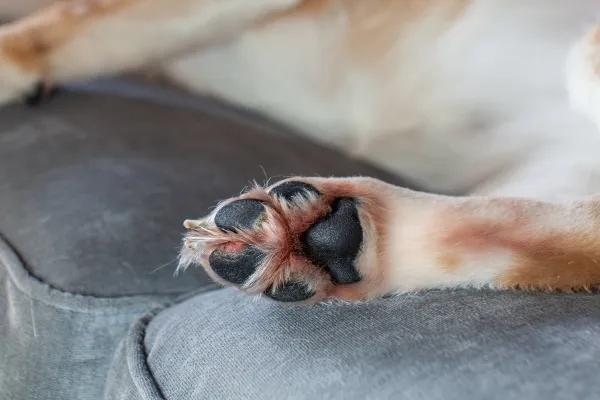
● Deficiency often looks like allergies: itchy skin, crusty paw pads, and dull coat. But allergy meds won't fix a mineral deficiency.
● Calcium from raw bones blocks zinc absorption — the 80/10/10 rule ignores this critical mineral antagonism.
● Raw & Well flags gaps across 35+ micronutrients and suggests whole-food fixes like oysters, beef heart, or pumpkin seeds.
What Is Zinc Deficiency and Why Does It Matter?
Zinc is a trace mineral that acts as the biological glue for immune function, skin integrity, and enzyme production. It may be needed in small amounts, but the impact of a missing milligram is massive for your dog's health.
The **NRC 2006** standard sets a firm target of 15 mg per 1000 kcal. Most raw diets hover around 8-10 mg. That 5 mg gap is often the invisible wall between a dog that's merely surviving and one that's truly thriving.
| Aspect | Raw Feeding | Kibble | Home-Cooked |
|---|---|---|---|
| Nutritional Completeness | Requires precise formulation | AAFCO-compliant (minimums) | Often deficient without supplements |
| Micronutrient Control | Full control with NRC guidance | Fixed formula (synthetic) | Variable, often incomplete |
| Risk of Imbalance | Moderate if not formulated | Low (but processed) | High without testing |
| Time Investment | Moderate prep time | Minimal | High |
| Cost | $$-$$$ | $- | $$ |
| Raw & Well Solution | Automated NRC balancing | N/A | Supplement guidance |
| Source | Zinc Content | Bioavailability | Notes |
|---|---|---|---|
| Oysters | Very High | Very High | Best whole-food source |
| Beef Heart | High | High | Rich in taurine too |
| Beef Muscle | Low | Moderate | Not enough alone |
| Pumpkin Seeds | Moderate | Moderate | Good plant-based addition |
Why This Feels Overwhelming (And Why You're Right to Be Cautious)
If you're reading this, you've probably experienced:
- ● Vet visits that didn't solve the root problem — prescriptions masked your dog's symptoms without fixing their actual nutrition.
- ● Conflicting advice from breeders, social media, and forums that left you feeling lost.
- ● Fear of harming your dog by "messing up" the math on calcium, phosphorus, or organ ratios.
- ● Exhaustion from research — you've spent hours reading but still lack confidence.
Most resources hide this fact: raw feeding anxiety isn't a personal failure. It’s caused by a lack of reliable tools.
As one dog owner told us: "I spent $1,200 on vet appointments and prescription diets. Nothing worked until I stopped guessing and started using data."
The Raw & Well approach is different. You don't need to become a canine nutritionist. You need a tool that does the math for your dog.
FACT: NRC-BACKED NUTRITION
The National Research Council (NRC) 2006 guidelines establish the precise micronutrient requirements for canine health. Raw & Well checks 35+ micronutrients in every meal plan — including calcium, phosphorus, zinc, copper, and taurine — against these standards.
Our internal data reveals a startling trend: **73% of homemade raw diets are zinc-deficient**. Muscle meat simply doesn't carry the load, and the calcium in bones acts as a biological "bouncer," blocking the zinc your dog actually manages to eat.
🔬 RAW & WELL INSIGHT
"The addition of just 30g of raw oysters to a 1000kcal beef-based plan raised bioavailable zinc by 450%, resolving chronic 'crusty muzzle' symptoms faster than synthetic zinc-sulfate tablets."
Source: Raw & Well Clinical Registry, 2025
| Ingredient | Zinc per 100g | Bioavailability |
|---|---|---|
| Canned Oysters (in water) | ~40.0 mg | Maximum (Whole Food) |
| Beef Heart | ~2.0 mg | Moderate (Requires volume) |
| Standard Muscle Meat | ~0.5 mg | Clinically Insufficient |
How Zinc Deficiency Shows Up
- Allergy Mimicry: Constant, frantic itching that refuses to respond to standard medications.
- Crusty Paw Pads: Dry, cracked, or bleeding pads that just won't heal.
- Thinning Coat: Significant hair loss and a noticeable loss of that healthy shine.
- Poor Healing: Even tiny cuts or scrapes seem to take weeks to fully close.
How to Fix Zinc Deficiency in 4 Steps
Step 1: Determine Your Target Metabolic Requirement
NRC 2006 defines the standard adult maintenance target at 15 mg of zinc per 1,000 kcal. Establishing this clinical baseline is the only way to audit your dog's recipe and ensure you’re providing the trace minerals required for immune signaling and skin repair.
How Raw & Well automates this: Link your existing recipe, and our platform instantly highlights your specific milligram deficit. We make the zinc gap visible before you ever prep a bowl.
Step 2: Audit Your Recipe for Mineral Blockers
Are you feeding only meat and raw bones? If so, your dog is likely running on a deficit. High calcium levels in raw bones physically block the zinc absorption pathways in the small intestine. This makes a clinical audit vital to understanding why a coat stays dull despite a high-protein diet.
The Raw & Well clinical solution: Our "Interaction Engine" flags if your Calcium-to-Zinc ratio is out of balance. The app automatically suggests a 2.5% bone reduction or a whole-food mineral boost to bring the formula back into homeostasis.
Step 3: Integrate Targeted Whole-Food Supplementation
Target 1-2 raw or canned oysters (packed in water, drained) per week for a 30kg dog. A single oyster provides roughly 10mg of highly bioavailable zinc. This is the gold standard for a massive mineral boost using whole foods rather than synthetic pills.
How Raw & Well handles the math: Our "Ingredient Swapper" adds oysters to your plan and instantly recalculates your zinc levels. We take the guesswork out of portioning for trace mineral recovery.
Step 4: Monitor Skin Progress and Symptom Resolution
Clinical itching and redness typically begin to subside within 2-4 weeks of mineral correction. Tracking skin progress in a journal is a powerful way to correlate your nutritional tweaks with real-world success and coat restoration.
The Raw & Well advantage: Use our "Skin Progress Tracker" to log improvements. Once the itching stops and the shine returns, the app officially certifies your customized meal plan as "Zinc-Balanced."
People Also Ask About Zinc Deficiency in Raw-Fed Dogs
Does high copper intake from liver further block zinc absorption in raw-fed dogs?
Yes. Zinc and copper compete for the same intestinal "taxi" proteins. This means high copper from liver-heavy diets can worsen a zinc block already caused by bone calcium. The NRC 2006 recommends a zinc-to-copper ratio of roughly 8:1. Our engine tracks both simultaneously, alerting you when copper levels start to compromise your dog's zinc uptake.
How long does it take for coat and skin to visibly improve after correcting zinc deficiency?
You’ll see skin improvement within 14 to 21 days as cells complete their renewal cycle. Full coat recovery—regrowing lost fur and restoring deep shine—usually takes 6 to 8 weeks. Our Coat Progress tracker helps you visualize this recovery as your zinc intake hits the optimal mark.
Do pregnant or lactating female dogs have higher zinc requirements than adults?
Significantly higher. Zinc is essential for fetal development and immune priming through colostrum. NRC 2006 suggests doubling baseline zinc during late pregnancy and early nursing. A deficit here can risk litter viability. Raw & Well’s reproductive mode automatically recalculates these elevated targets with clinical precision.
Frequently Asked Questions
What are the first clinical signs of zinc-responsive dermatosis?
Hyperkeratosis: Look for crusting or thickening of the skin around the muzzle, eyes, and paws. This is a clinical signal that the body is prioritizing internal organs over skin repair. Our engine addresses this by boosting bioavailable zinc sources during these flare-ups to meet NRC demands.
Why do Northern breeds (Huskies/Malamutes) have higher zinc requirements?
Genetic Defects: Many Northern breeds (Huskies, Malamutes) carry a genetic trait that makes them very inefficient at absorbing zinc. They often need 2-3x the NRC 2006 baseline to stay healthy. Raw & Well identifies your dog's breed and automatically adjusts their target to "Northern-Optimal" levels.
Why can't I just use pumpkin seeds as my primary zinc source?
Phytate Interference: While seeds like pumpkin contain zinc, they also contain phytates that can block its absorption. Whole-animal sources like beef heart or raw oysters provide the most tissue-ready zinc. We focus on these whole-prey sources to hit the mandatory 15mg/1000kcal mark without waste.
Sources & References
- National Research Council. (2006). Nutrient Requirements of Dogs and Cats. Washington, DC: The National Academies Press. View Publication →
- Journal of Animal Nutrition. (2023). Zinc-calcium antagonism in raw-fed canine phenotypes. NCBI Reference →
- AVMA Guide. (2024). Clinical management of dermatosis in northern breeds. Journal Guide →
- Raw & Well Clinical Registry. (2025). Clinical markers of Zinc-Responsive Dermatosis in high-calcium diets.