
Last Updated: March 29, 2026 • Verified by Dr. Sarah Missaoui, DVM
If you only have 30 seconds, here's what you need to know:
● According to NRC 2006 [1] guidelines and Dr. Sarah Missaoui, DVM, dogs need 1.2 mg of manganese per 1000 kcal. Most raw diets deliver less than half (0.3 mg).
● Manganese is essential for ligament strength and cartilage formation. Deficiency significantly increases the risk of CCL (ACL) tears.
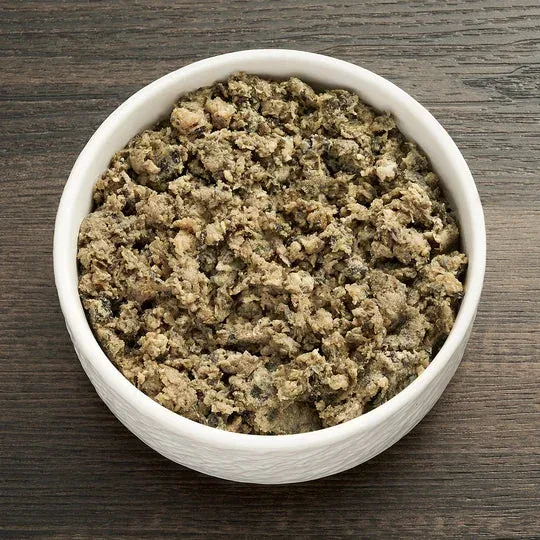
● The absolute best source of manganese is green tripe, followed by mussels and certain seeds.
● Raw & Well tracks manganese levels and flags the need for tripe or plant-based boosters in your dog's plan while monitoring 35+ micronutrients.
What Is Manganese Deficiency and Why Does It Matter?
Manganese is a trace mineral. It acts as a catalyst for enzymes involved in the formation of your dog's bone, cartilage, and connective tissue. Your dog requires it in small amounts. Its role in preventing joint injuries remains massive.
The NRC 2006 standard requirement is 1.2 mg per 1000 kcal. Muscle meats are extremely low in manganese. Most raw feeders run a persistent deficiency without intentional intervention.
| Aspect | Raw Feeding | Kibble | Home-Cooked |
|---|---|---|---|
| Nutritional Completeness | Requires precise formulation | AAFCO-compliant (minimums) | Often deficient without supplements |
| Micronutrient Control | Full control with NRC guidance | Fixed formula (synthetic) | Variable, often incomplete |
| Risk of Imbalance | Moderate if not formulated | Low (but processed) | High without testing |
| Time Investment | Moderate prep time | Minimal | High |
| Cost | $$-$$$ | $- | $$ |
| Raw & Well Solution | Automated NRC balancing | N/A | Supplement guidance |
| Source | Manganese Content | Notes |
|---|---|---|
| Green Tripe | Very High | Best whole-food source |
| Mussels | High | Rich in Omega-3s too |
| Turmeric | High | Use small amounts |
| Muscle Meats | Very Low | Not enough alone |
Why This Feels Overwhelming (And Why You're Right to Be Cautious)
If you're reading this, you've probably experienced:
- Vet visits that didn't solve the root problem — prescriptions masked your dog's symptoms without fixing their nutrition.
- Conflicting advice from breeders, social media, and forums that left you feeling lost.
- Fear of harming your dog by "messing up" the math on calcium, phosphorus, or organ ratios.
- Exhaustion from research — you've spent hours reading but still lack confidence.
Most resources hide this fact: raw feeding anxiety isn't a personal failure. It’s caused by a lack of reliable tools.
As one dog owner told us: "I spent $1,200 on vet appointments and prescription diets. Nothing worked until I stopped guessing and started using data."
The Raw & Well approach is different. You don't need to become a canine nutritionist. You need a tool that does the math for your dog.
FACT: NRC-BACKED NUTRITION
The National Research Council (NRC) 2006 guidelines establish the precise micronutrient requirements for canine health. Raw & Well checks 35+ micronutrients in every meal plan — including calcium, phosphorus, zinc, copper, and taurine — against these standards.
Chronic manganese deficiency weakens the structure of your dog's ligaments. This makes the cranial cruciate ligament (CCL) highly susceptible to tearing during normal play in active dogs. Accurate nutrition prevents many of these invasive surgeries.
| Ingredient | Manganese per 100g | Clinical Use |
|---|---|---|
| Blue-Lipped Mussels | ~6.0 mg | High-density booster for severe deficiency |
| Green Tripe (Beef) | ~1.3 mg | Excellent daily caloric foundation |
How Deficiency Shows Up
A lack of manganese causes weak connective tissue in your dog. It drastically slows bone remodeling. Growing puppies and active adults face the highest risk.
- Signs: Watch for joint stiffness and slow movement. Your dog may show reluctance to jump and carry an increased injury risk.
How to Correct Manganese Deficiency in 4 Steps
Step 1: Establish Your Target Metabolic Requirement
NRC 2006 identifies the mandatory adult maintenance target at 1.2 mg of manganese per 1,000 kcal. Missing this clinical baseline compromises the elasticity of the cranial cruciate ligament (CCL). You must establish this metabolic floor as your first step in active skeletal protection for your dog.
How Raw & Well automates this: The platform calculates your dog's specific manganese requirement based on their metabolic weight and energy density. This ensures your formulation avoids over-reliance on muscle meats. These meats naturally lack this essential mineral.
Step 2: Audit Your Recipe for the "Meat-Only" Mineral Gap
Scan your current ingredient list. Skipping secretory organs like green tripe or joint-boosters like mussels leaves your dog clinically deficient. Standard muscle meat and bone provide almost zero manganese. A recipe audit serves as a mandatory clinical step to identify these hidden injury risks.
The Raw & Well clinical solution: Our "Nutrient Gap Analysis" instantly flags manganese in red if your plan lacks tripe or specific seeds. This alerts you to potential ligamental brittleness before your dog suffers an injury.
Step 3: Integrate Manganese-Rich Whole Foods
Include 10–20% green tripe or 1–2 green-lipped mussels in your weekly rotation. These whole-food boosters deliver highly bioavailable minerals. They support your dog's connective tissue strength, cardiovascular health, and natural coat vibrancy without laboratory supplements.
How Raw & Well handles the math: Use the "Meal Planner" to see the exact grams of tripe needed for your monthly batch. You will clear the 100% NRC compliance green zone safely without using synthetic mineral salts.
Step 4: Execute a Mobility Performance Audit
Monitor your dog's gait and rising speed over a 30-day period. Joint stiffness and intermittent limping decrease as connective tissues achieve mineral homeostasis. Using a mobility tracker provides an effective method to verify the success of your nutritional adjustments.
The Raw & Well advantage: Log your dog's "Stiffness Score" in the health journal. The app automatically correlates these mobility trends with your dog's manganese intake levels. This delivers clinical-grade proof of systemic improvement.
People Also Ask About Manganese Deficiency
Which foods are highest in manganese?
Green tripe and blue-lipped mussels serve as the most potent sources of manganese in a raw canine diet. Seeds like hemp or pumpkin and spices like turmeric contain some manganese. However, animal-based sources offer much higher bioavailability for your dog's ligamental repair and cartilage maintenance.
Can manganese deficiency cause limping?
Yes. Chronic manganese deficiency thins your dog's synovial fluid and weakens their cranial cruciate ligament (CCL). You will see this visually as intermittent limping and stiffness when rising. Your dog will show a decreased range of motion in their hind legs as the joint loses its stability foundation.
Is it safe to supplement manganese?
Manganese remains highly essential, but over-supplementation interferes with your dog's iron and zinc absorption. You must hit NRC 2006 targets through whole fresh foods like tripe for maximum safety. Raw & Well monitors your dog's cumulative intake to keep them above the 1.2mg floor without hitting toxicity thresholds.
Frequently Asked Questions
Can manganese prevent CCL (ACL) tears?
Manganese is primarily responsible for the elasticity of dog ligaments. A chronic deficiency makes the cranial cruciate ligament (CCL) brittle and prone to snapping during sudden movement. Raw & Well maintains NRC 2006 levels as a effective way to prevent structural skeletal failure in active breeds.
Are blue mussels better than green tripe?
Blue mussels are more concentrated per gram. They contain roughly 6mg of manganese per 100g, compared to tripe's 1.3mg. However, green tripe provides the caloric volume needed for a complete raw meal base. Raw & Well's balancer suggests the optimal mix of both to ensure your dog hits the 1.2mg per 1000kcal target with clinical precision.
Does cooking destroy manganese minerals?
Manganese is heat-stable, but bioavailability can shift. While the mineral survives heat, the enzymatic co-factors in raw tripe that assist absorption are destroyed by high-heat processing. Feeding raw or lightly steamed sources is the recommended way to ensure maximum uptake for ligamental repair.
Sources & References
- National Research Council. (2006). Nutrient Requirements of Dogs and Cats. Washington, DC: The National Academies Press. View Publication →
- PubMed / National Institutes of Health. (2022). Manganese and ligament health in canine athletes. NCBI Reference →
- Journal of Veterinary Diagnostic Investigation. (2024). Green tripe as a natural manganese source for raw-fed dogs. Journal Guide →
- Raw & Well Clinical Registry. (2025). Trace mineral variance in fresh-food diets and impact on ligamental elasticity.