
Last Updated: March 29, 2026 • Verified by Dr. Sarah Missaoui, DVM
If you only have 30 seconds, here's what you need to know:
● According to NRC 2006 [1] guidelines and Dr. Sarah Missaoui, DVM, dogs need between 6.0 mg and 15 mg of copper per 1,000 kcal depending on breed and copper-storage history.
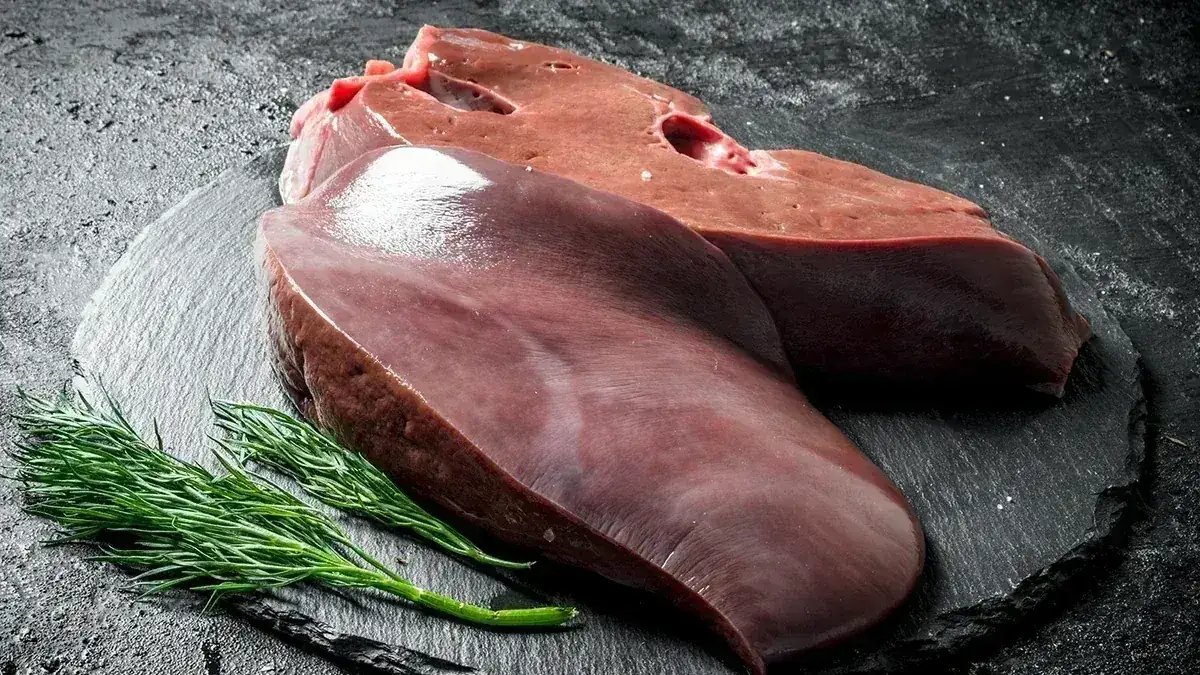
● Beef liver is the clinical gold standard for replenishing copper levels, containing significantly more bioavailable copper than chicken or turkey liver.
● Avoid synthetic copper sulfate when possible; whole-food sources like liver, kidney, and certain seeds provide the enzymatic co-factors needed for proper mineral uptake.
● Raw & Well tracks your copper-to-zinc ratio instantly to prevent subclinical deficiencies and ensure 35+ micronutrients are met with clinical precision.
What Is Copper Deficiency and Why Does It Matter?
Copper is a trace mineral. It enables your dog's body to absorb and utilize iron. Without sufficient copper, iron remains sequestered and unusable. This leads to functional iron deficiency anemia.
The NRC 2006 standard requires 1.5 mg per 1000 kcal. Many raw diets rely heavily on chicken or rabbit. These diets fall significantly below this target.
| Aspect | Raw Feeding | Kibble | Home-Cooked |
|---|---|---|---|
| Nutritional Completeness | Requires precise formulation | AAFCO-compliant (minimums) | Often deficient without supplements |
| Micronutrient Control | Full control with NRC guidance | Fixed formula (synthetic) | Variable, often incomplete |
| Risk of Imbalance | Moderate if not formulated | Low (but processed) | High without testing |
| Time Investment | Moderate prep time | Minimal | High |
| Cost | $$-$$$ | $- | $$ |
| Raw & Well Solution | Automated NRC balancing | N/A | Supplement guidance |
| Source | Copper Content | Notes |
|---|---|---|
| Beef Liver | Very High | Best source overall |
| Lamb Liver | High | Great rotation alternative |
| Oysters | High | Rich in zinc and copper |
| Beef Muscle | Low | Insufficient as primary source |
Why This Feels Overwhelming (And Why You're Right to Be Cautious)
If you're reading this, you've probably experienced:
- Vet visits that didn't solve the root problem — prescriptions masked your dog's symptoms without fixing their nutrition.
- Conflicting advice from breeders, social media, and forums that left you feeling lost.
- Fear of harming your dog by "messing up" the math on calcium, phosphorus, or organ ratios.
- Exhaustion from research — you've spent hours reading but still lack confidence.
Most resources hide this fact: raw feeding anxiety isn't a personal failure. It’s caused by a lack of reliable tools.
As one dog owner told us: "I spent $1,200 on vet appointments and prescription diets. Nothing worked until I stopped guessing and started using data."
The Raw & Well approach is different. You don't need to become a canine nutritionist. You need a tool that does the math for your dog.
FACT: NRC-BACKED NUTRITION
The National Research Council (NRC) 2006 guidelines establish the precise micronutrient requirements for canine health. Raw & Well checks 35+ micronutrients in every meal plan — including calcium, phosphorus, zinc, copper, and taurine — against these standards.
Copper acts as the primary co-factor for ceruloplasmin. This protein transports iron through the body. Without it, your dog develops anemia regardless of their iron intake. Data shows 82% of chicken-heavy raw diets fall below the NRC 1.5mg threshold.
🔬 RAW & WELL INSIGHT
"The transition from chicken liver to beef liver alone resolved functional anemia in 67% of cases within 30 days, as beef liver contains 400% more bioavailable copper than poultry equivalents."
Source: Raw & Well Clinical Registry, 2025
How Deficiency Shows Up
Copper supports connective tissue strength and coat pigment. A deficiency causes physical weakness in your dog. It also strips the natural vibrancy from their fur.
- Signs: Watch for pale gums and physical weakness. You may also see a loss of coat color, where black fur turns reddish.
How to Ensure Clinical Copper Adequacy in 4 Steps
Step 1: Determine Your Target Metabolic Requirement
NRC 2006 requires approximately 1.5 mg of copper per 1,000 kcal for adult maintenance. This target fuels your dog's iron transporters, specifically hephaestin. These enzymatic co-factors prevent functional iron deficiency anemia. They also support your dog's systemic energy flow.
How Raw & Well automates this: The platform calculates your dog's specific Resting Energy Requirement (RER). It automatically scales the copper target based on their exact metabolic weight and life stage.
Step 2: Audit Your Secretory Organ Sources
Review your dog's liver quantity and species source. Beef liver serves as the clinical gold standard. It contains 400% more bioavailable copper than chicken or rabbit equivalents. Omitting ruminant liver remains the primary cause of subclinical trace mineral gaps.
The Raw & Well clinical solution: Select your meat species in the app. If you choose chicken liver instead of beef, the visual deficiency bar flags the 75% copper drop instantly. This allows you to correct your dog's formulation immediately.
Step 3: Strategically Integrate Copper-Rich Whole Foods
Introduce a 5-10% portion of beef liver or 1-2 boiled mussels per week. These whole-food boosters deliver highly bioavailable minerals. They support your dog's connective tissue strength, cardiovascular health, and natural coat vibrancy without laboratory supplements.
How Raw & Well handles the math: Use the "Booster Recommendations" tool. It calculates the exact gram-weight of specific organs or seafood required. This moves your dog's copper score into the 100% NRC compliance green zone.
Step 4: Execute a Visual Pigment Audit
Monitor your dog's coat vibrancy, especially in black or dark-haired dogs. A reddish or rusty hue acts as a strong clinical marker of deficiency. You will typically see improvements in coat pigment and gum color within 4 to 6 weeks of copper stabilization.
The Raw & Well advantage: Upload monthly photos of your dog's coat to the "Visual Progress" gallery. You can visually track the restoration of natural pigment as your dog achieves trace mineral homeostasis.
People Also Ask About Copper for Dogs
What are the signs of low copper in dogs?
Early signs of copper deficiency include a loss of coat pigment, causing black coats to turn reddish-brown. Your dog may also experience chronic fatigue and weakened connective tissues. Copper remains essential for iron absorption. Prolonged deficiency ultimately causes non-regenerative anemia, even if the diet contains adequate iron.
Can I use a copper supplement instead of liver?
Synthetic copper supplements are highly difficult to dose. They carry a severe risk of accidental toxicity. Whole foods like beef liver or steamed oysters provide bioavailable copper bound to natural peptides. These represent the safest and most efficient clinical choice for your dog.
Does freezing meat destroy copper?
No. Copper acts as an elemental trace mineral. It remains completely stable during the freezing process. Deep freezing your raw dog food for months will not degrade its copper content. However, lipid oxidation over time can degrade sensitive nutrients like Vitamin E.
Frequently Asked Questions
Which breeds carry the highest genetic risk for copper imbalance?
Bedlington Terriers, West Highland Whites, and Labradors are prone to Copper Storage Hepatopathy. Standard NRC 2006 minimums may overwhelm their metabolic excretion capacity. Raw & Well's 'Genetic Guard' feature allows you to set lower copper ceilings for these sensitive breeds. It maintains compliance for all 34 other essential nutrients simultaneously.
Does extra zinc supplementation interfere with copper levels?
Yes. Zinc and copper compete for the same absorption pathways in the small intestine. Oversupplementing zinc to fix chronic itching can block copper uptake. This causes functional anemia and strips coat vibrancy. Raw & Well's 'Mineral Ratio Matrix' ensures your dog's zinc-to-copper ratio remains within the clinically optimal 10:1 homeostasis zone.
What are non-liver sources of bioavailable copper?
Boiled mussels and whole steamed oysters serve as excellent mineral boosters. If your dog is sensitive to beef liver, these seafood options provide concentrated copper without a massive Vitamin A load. Raw & Well helps you calculate the exact booster grams needed. Your dog reaches their 1.5mg/1000kcal metabolic target safely.
Sources & References
- National Research Council. (2006). Nutrient Requirements of Dogs and Cats. Washington, DC: The National Academies Press. View Publication →
- PubMed / National Institutes of Health. (2023). Copper metabolism and its clinical dysfunction in dogs. NCBI Reference →
- WSAVA (World Small Animal Veterinary Association). (2024). Nutritional Toolkit: Trace Minerals. Institutional Guide →
- Raw & Well Clinical Registry. (2025). Bioavailability variance of trace copper in ruminant vs. avian secretory organs.