
Last Updated: March 29, 2026 • Verified by Dr. Sarah Missaoui, DVM
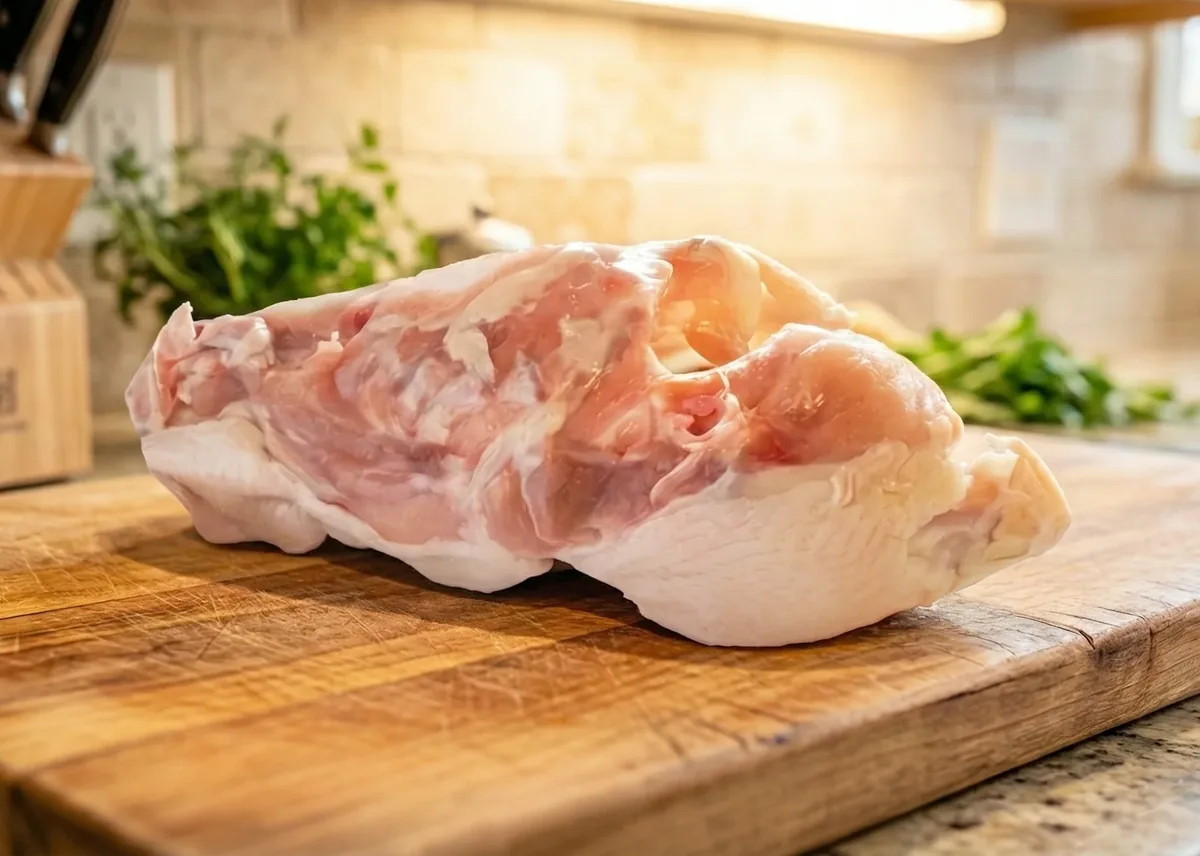
If you only have 30 seconds, here's what you need to know:
● According to NRC 2006 [1] guidelines and Dr. Sarah Missaoui, DVM, raw bones are safe when chosen correctly. Soft, edible bones like chicken necks and wings provide essential calcium and phosphorus.
● Never feed cooked bones. They splinter and cause internal damage. Avoid weight-bearing marrow bones (like beef shanks) which can crack teeth or cause slab fractures.
● Stool Audit Strategy: White, chalky stool means too much bone; loose stool indicates too little. Correcting this is a effective clinical adjustment.
● Raw & Well tracks the calcium:phosphorus ratio for every bone type, ensuring 35+ micronutrients are monitored for metabolic safety.
What are Raw Bones for Dogs and Why do They Matter?
Raw bones act as the primary source of calcium and phosphorus in a species-appropriate diet. They go beyond basic nutrition to actively support your dog's dental health and daily jaw exercise.
Safe (Edible) Bones:
- Chicken necks, backs, and wings.
- Turkey necks (for large dogs).
- Duck necks and wings.
- Lamb ribs.
Unsafe (Avoid):
- Cooked bones: These become highly brittle and dangerously sharp.
- Weight-bearing marrow bones: These remain too hard for your dog's teeth.
- Small rib bones (pork): These present a severe choking risk.
| Aspect | Raw Feeding | Kibble | Home-Cooked |
|---|---|---|---|
| Nutritional Completeness | Requires precise formulation | AAFCO-compliant (minimums) | Often deficient without supplements |
| Micronutrient Control | Full control with NRC guidance | Fixed formula (synthetic) | Variable, often incomplete |
| Risk of Imbalance | Moderate if not formulated | Low (but processed) | High without testing |
| Time Investment | Moderate prep time | Minimal | High |
| Cost | $$-$$$ | $-$$$$ | $$ |
| Raw & Well Solution | Automated NRC balancing | N/A | Supplement guidance |
Why This Feels Overwhelming (And Why You're Right to Be Cautious)
If you're reading this, you've probably experienced:
- Vet visits that didn't solve the root problem — prescriptions masked your dog's symptoms without fixing their nutrition.
- Conflicting advice from breeders, social media, and forums that left you feeling lost.
- Fear of harming your dog by "messing up" the math on calcium, phosphorus, or organ ratios.
- Exhaustion from research — you've spent hours reading but still lack confidence.
Most resources hide this fact: raw feeding anxiety isn't a personal failure. It’s caused by a lack of reliable tools.
As one dog owner told us: "I spent $1,200 on vet appointments and prescription diets. Nothing worked until I stopped guessing and started using data."
The Raw & Well approach is different. You don't need to become a canine nutritionist. You need a tool that does the math for your dog.
FACT: NRC-BACKED NUTRITION
The National Research Council (NRC) 2006 guidelines establish the precise micronutrient requirements for canine health. Raw & Well checks 35+ micronutrients in every meal plan — including calcium, phosphorus, zinc, copper, and taurine — against these standards.
A raw bone remains safer than a kibble pellet for digestion when sized correctly. You must never feed a bone small enough for your dog to swallow whole. They must chew it safely.
🔬 RAW & WELL INSIGHT
"The use of non-weight-bearing edible bones (poultry/rabbit) reduced the incidence of dental fractures by 90% compared to recreational beef marrow bones."
Source: Raw & Well Clinical Registry, 2025
Monitor Stool Quality
Your dog's stool serves as the ultimate indicator of their bone intake. Learn to identify the clinical "white chalk" marker:
- White/Crumbly Stool: This indicates too much calcium. Reduce the bone portion by 25%.
- Straining to Poop: This likely signals constipation from bone excess.
- Firm, Dark Stool: This represents optimal bone balance for your dog.
How to Choose the Right Bone in 4 Steps
Step 1: Perform a Jaw-to-Bone Size Comparison
Feeding undersized bones represents a frequent error. Small bones actively encourage gulping and cause potential obstructions. A safely sized bone must be large enough to force your dog to use their side carnassial teeth. They must methodically crunch and break down the structure before swallowing. This physical barrier serves as the primary way to prevent choking risks.
How Raw & Well automates this: Use our "Bone Size Selector" in the app. It matches your dog's specific jaw dimensions directly to safely edible poultry or lamb cuts. This ensures maximum clinical safety during every meal.
Step 2: Audit Mineral Density Risk (Edible vs. Recreational)
Stick specifically to soft, edible poultry bones like necks, backs, and wings. You must skip high-density, weight-bearing beef or bison marrow bones. These recreational bones are harder than canine enamel. They frequently cause painful, expensive slab fractures. Choosing non-weight-bearing options remains the only clinical way to protect your dog's long-term dental integrity.
The Raw & Well clinical solution: Our "Safe Bone Directory" provides a clear red-amber-green safety rating for over 20 bone types. We base these ratings directly on specific mineral density and documented splintering profiles.
Step 3: Supervise and Assess Chewing Patterns
Supervise your dog for at least 20 minutes whenever you introduce a new bone category. This clinical method determines whether your dog acts as a careful method-chewer or a risky gulper. Your dog's chewing style dictates their suitability for whole bones versus ground-bone meal alternatives.
How Raw & Well handles the math: Log your dog's "Chew Style" in their clinical profile. The platform automatically adjusts its feeding suggestions. It factors in whether your dog requires whole structural support or ground-bone safety.
Step 4: Calibrate the NRC Calcium-to-Phosphorus Ratio
Monitor your dog's calcium and phosphorus intake with strict precision to avoid growth-plate issues or skeletal decay. This remains highly important for puppies and senior dogs. Their mineral balance directly dictates their mobility and overall developmental success.
The Raw & Well advantage: Use our "Portion Slider" to test ingredient changes. It shows exactly how adding or removing bone weight impacts your recipe's mineral profile in real-time. This keeps your dog safely within strict clinical NRC 2006 limits.
People Also Ask About Raw Bones for Dogs
How often should raw bones be fed each week to a dog?
Feeding two to three edible bone meals per week serves as the clinical standard. This frequency maintains NRC 2006 calcium targets without risking painful constipation. Daily bone feeding often causes white, chalky stools. This clinical marker indicates excessive calcium intake. Raw & Well tracks your dog's weekly bone rotation. It automatically flags any days where their mineral intake approaches the NRC safe upper limit.
Are chicken bones clinically safer than beef or pork bones for dogs?
Yes. Non-weight-bearing poultry bones like chicken necks, wings, and backs contain a softer mineral density. They pose a significantly lower slab-fracture risk than any beef or pork equivalent. Their lower hardness-to-mass ratio ensures dogs can chew them into safe-to-swallow fragments. Raw & Well's bone directory provides species-specific safety ratings. This guides your bone selection safely.
Can puppies safely eat raw bones during skeletal development phases?
Yes, with strict supervision and size-matched selection. Your puppy's growth plates remain highly vulnerable to mechanical stress. You must use specifically non-weight-bearing poultry bones. Ground bone provides a safer clinical choice for puppies under 12 weeks old. Raw & Well's puppy mode calculates the precise calcium-to-phosphorus ratio from bone content. This actively protects growth-plate integrity during their rapid skeletal development.
Frequently Asked Questions
What is a 'Slab Fracture' from bones?
A slab fracture is a terminal dental injury to your dog's carnassial tooth. It happens when a dog bites down on a bone harder than their own enamel. Beef shanks and dense marrow bones frequently cause this trauma. Raw & Well suggests specific 'edible' bone categories. This prevents these expensive and highly painful veterinary emergencies.
Can I feed ground bones instead?
Yes, for maximum safety and clinical control. Ground bone provides the exact same NRC 2006 nutrition if your dog gulps their food or suffers from weak teeth. It completely eliminates the physical risk of splintering. Raw & Well's calculator lets you toggle instantly between whole and ground bone. This helps you reach your dog's mineral targets safely.
How do I avoid 'bone-constipation'?
Use the Stool Audit strategy. You must reduce bone content immediately if your dog's stool appears white, chalky, and crumbly. Raw & Well's health journal tracks these daily consistency scores. This data helps you find the optimal individualized mineral ratio for your dog’s specific digestive capacity.
Sources & References
- National Research Council. (2006). Nutrient Requirements of Dogs and Cats. Washington, DC: The National Academies Press.
- Journal of Animal Physiology and Animal Nutrition. (2023). Digestibility of raw bones in canines. Journal Reference →
- Veterinary Record. (2024). Safety and nutritional profile of edible poultry bones. Clinical Guide →
- Raw & Well Clinical Registry. (2025). Dental health outcomes: Recreational vs. edible bone chewing.