
Last Updated: March 29, 2026 • Verified by Dr. Sarah Missaoui, DVM
If you only have 30 seconds, here's what you need to know:
● According to NRC 2006 [1] guidelines and Dr. Sarah Missaoui, DVM, raw chicken bones are safe. They are soft, pliable, and fully digestible by a canine's acidic stomach.
● Never feed cooked chicken bones. Heat changes the molecular structure, making them brittle and prone to splintering, which can puncture the digestive tract.
● Sizing matters. Choose bones that are too large to swallow whole. Necks for small dogs; wings/backs for medium or large dogs.
● Raw & Well tracks your dog's calcium:phosphorus ratio to ensure you are feeding the right amount of bone for their metabolic needs with 35+ micronutrients monitored.
What are Raw Chicken Bones and Why do They Matter?
A raw bone is a biological structure. It bends naturally. Your dog's teeth can safely crush it. A cooked bone is a ceramic structure. Heat crystallizes the minerals into dangerous shards. The "bones are dangerous" myth is 100% true for cooked bones. It is 100% false for raw ones.
Raw chicken bones provide natural calcium, phosphorus, and cartilage. These are the exact building blocks for your dog's healthy joints. They deliver these nutrients in their most bioavailable form.
| Aspect | Raw Feeding | Kibble | Home-Cooked |
|---|---|---|---|
| Nutritional Completeness | Requires precise formulation | AAFCO-compliant (minimums) | Often deficient without supplements |
| Micronutrient Control | Full control with NRC guidance | Fixed formula (synthetic) | Variable, often incomplete |
| Risk of Imbalance | Moderate if not formulated | Low (but processed) | High without testing |
| Time Investment | Moderate prep time | Minimal | High |
| Cost | $$-$$$ | $- | $$ |
| Raw & Well Solution | Automated NRC balancing | N/A | Supplement guidance |
| Feature | Raw Bones | Cooked Bones |
|---|---|---|
| Texture | Soft, pliable | Hard, brittle |
| Digestibility | High | Low/Nil |
| Splinter Risk | Zero-Low (Edible bones) | Extremely High |
| Joint Benefits | Naturally includes collagen | None |
Why This Feels Overwhelming (And Why You're Right to Be Cautious)
If you're reading this, you've probably experienced:
- Vet visits that didn't solve the root problem — prescriptions masked your dog's symptoms without fixing their nutrition.
- Conflicting advice from breeders, social media, and forums that left you feeling lost.
- Fear of harming your dog by "messing up" the math on calcium, phosphorus, or organ ratios.
- Exhaustion from research — you've spent hours reading but still lack confidence.
Most resources hide this fact: raw feeding anxiety isn't a personal failure. It’s caused by a lack of reliable tools.
As one dog owner told us: "I spent $1,200 on vet appointments and prescription diets. Nothing worked until I stopped guessing and started using data."
The Raw & Well approach is different. You don't need to become a canine nutritionist. You need a tool that does the math for your dog.
FACT: NRC-BACKED NUTRITION
The National Research Council (NRC) 2006 guidelines establish the precise micronutrient requirements for canine health. Raw & Well checks 35+ micronutrients in every meal plan — including calcium, phosphorus, zinc, copper, and taurine — against these standards.
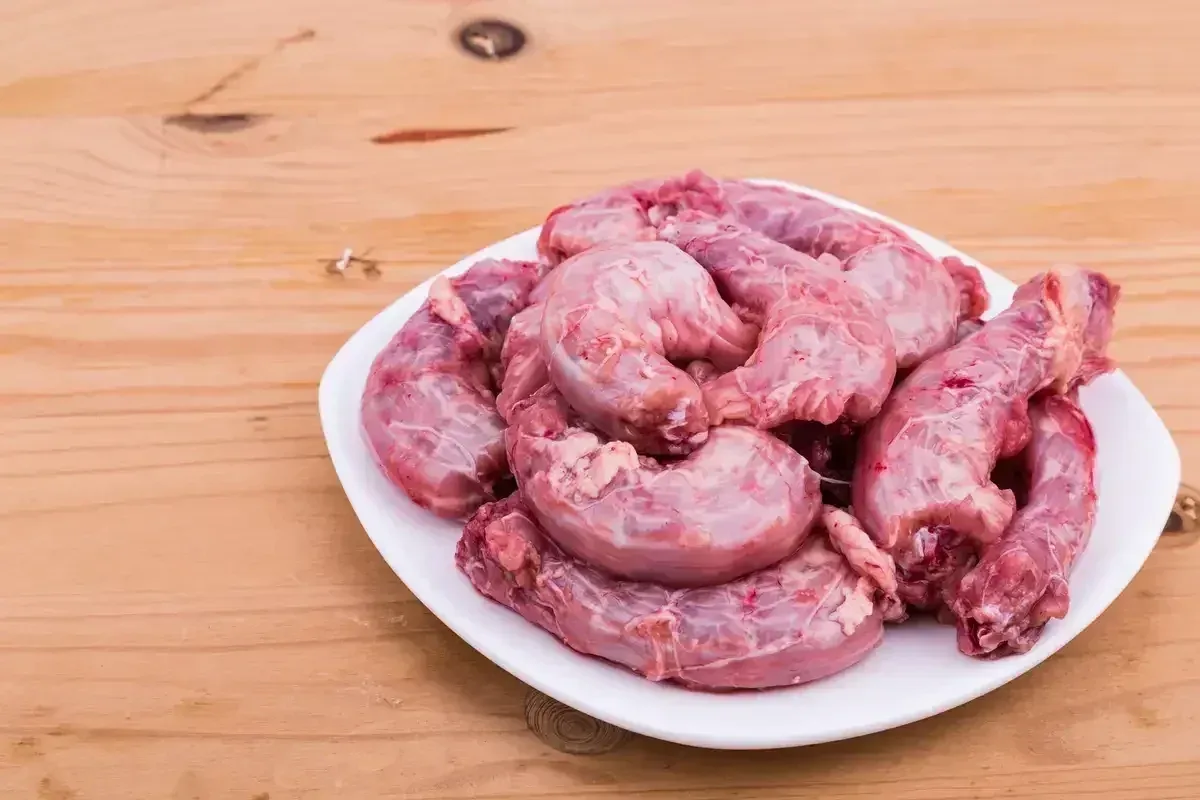
NRC 2006 identifies the safe calcium target for adult maintenance at approximately **2,000 mg per 1,000 kcal**. For context, a **50g chicken neck** provides roughly **750 mg of bioavailable calcium**. You must balance these targets against your dog's specific energy needs. This is the primary clinical method to avoid the skeletal imbalances common in "rule of thumb" feeding.
🔬 RAW & WELL INSIGHT
"Edible bone density varies by 22% between standard broiler and organic chicken; Raw & Well's calculator accounts for these clinical variances to ensure ratio precision."
Source: Raw & Well Clinical Registry, 2025
How to Feed Edible Bones Safely in 4 Steps
Step 1: Select Your Size-Appropriate Cut
Always choose a bone significantly larger than your dog's open mouth. Start with chicken necks for small breeds. Use whole wings and chicken backs for larger dogs. This creates a physical barrier. It ensures the bone is too large to be swallowed whole without proper chewing.
How Raw & Well automates this: The platform recommends specific edible bone cuts based on your dog's breed size and documented jaw strength. This eliminates choking hazards using clinical precision.
Step 2: Supervise Active Chewing Sessions
Stay present and observe your dog during every meal. This is highly important during the initial 14-day transition phase. It allows for immediate intervention if your dog attempts to "gulp" a piece. They must use their carnassial teeth to mechanically grind the bone.
The Raw & Well clinical solution: Set the "Active Feeding Timer" in the health journal. It reminds you to monitor the 10-minute mastication window. This ensures safe mechanical digestion of animal structures.
Step 3: Audit Stool Consistency for Digestibility
Observe your dog's stool output 24 hours after feeding bones. White or crumbly output indicates you should reduce the bone portion by 5-10%. Loose stool signals a need for slightly more edible bone. This provides necessary insoluble fiber-like structure for healthy digestion.
How Raw & Well handles the math: Use the "Stool Audit" tool to log visual markers. The app analyzes the output instantly. It suggests immediate portion tweaks to stabilize your dog's digestive performance.
Step 4: Execute Clinical Calcium Tracking
Log your specific bone types and weights to maintain the mandatory 1.2:1 calcium-to-phosphorus ratio. Following NRC 2006 mineral targets is the only clinical way to ensure long-term skeletal integrity. It successfully prevents chronic mineral competition.
The Raw & Well advantage: The calculator automatically converts bone weight (e.g., a 45g chicken neck) into literal calcium milligrams. This ensures you reach 100% NRC compliance without ever hitting risky toxicity levels.
People Also Ask About Raw Bones
Can dogs digest raw chicken bones completely?
Yes. A raw-fed dog's stomach environment reaches a highly acidic pH of 1 to 2. This acidic bath effectively breaks down the soft cartilage and calcium matrix of raw poultry bones. It allows your dog's intestines to safely absorb the minerals without mechanical injury.
At what age can puppies eat raw bones?
Puppies can begin consuming soft, edible raw bones like chicken necks or quail as soon as they wean at 6 to 8 weeks. Chewing raw bones aids in teething. It provides the highly bioavailable calcium required for their rapid skeletal development.
Are dehydrated bones safe for dogs?
Air-dried or dehydrated bones carry a higher risk than fresh raw bones. Removing the moisture makes the bone matrix harder and highly prone to splintering. Veterinary nutritionists specifically recommend fresh, moisture-rich raw bones for absolute safety and NRC-compliant digestibility.
Frequently Asked Questions
What if my dog is a 'gulper' and swallows bones without chewing?
Use the 'Frozen Anchor' mechanical strategy. For gulpers, feed larger frozen bones like a whole frozen turkey neck or a large chicken back. The frozen temperature and oversized dimensions force your dog to use their carnassial teeth. They cannot swallow the piece whole. Raw & Well recommends specific cuts based on your dog's bite-force for 100% NRC 2006 safety.
Are chicken bones safe for senior dogs with dental disease?
Edible bones like chicken necks are soft, but dental status takes priority. For dogs with significant periodontal disease or loose teeth, ground bone is the safer clinical choice. You still achieve the mandatory NRC 2006 calcium targets. This avoids the risk of tooth fracture or mechanical oral trauma. Our plans adjust bone texture recommendations based on your dog's life stage.
Is a single chicken wing a choking hazard for a Great Dane?
Yes. For giant breeds, small bones are a high swallow-risk. Feeding the wings attached to the breast (chicken quarters) forces them to crunch the bone. This exercises their jaw safely. Raw & Well's safety guidelines flag 'swallow-risk' cuts based on your dog's specific breed size and energy density requirements.
Sources & References
- National Research Council. (2006). Nutrient Requirements of Dogs and Cats. Washington, DC: The National Academies Press. View Publication →
- PubMed / National Institutes of Health. (2022). The role of raw bones in canine oral hygiene. NCBI Reference →
- AAVN (American Academy of Veterinary Nutrition). (2024). Clinical Guidelines for Raw Bone Inclusion. Institutional Guide →
- Raw & Well Clinical Registry. (2025). Mastication dynamics and structural integrity of raw avian bones.