
Last Updated: March 29, 2026 • Verified by Dr. Sarah Missaoui, DVM
If you only have 30 seconds, here's what you need to know:
● According to NRC 2006 [1] guidelines and Dr. Sarah Missaoui, DVM, "Detox" is a misnomer. Dogs don't store "kibble toxins" that suddenly leave through the skin. What you see is a gut microbiome shift and immune recalibration.
● Symptoms like temporary itching or loose stool are adaptation responses to fresh protein, moisture, and active enzymes.
● NRC 2006 compliance ensures these adaptation phases are short and don't turn into chronic deficiencies.
● Raw & Well tracks these symptoms and identifies if they are normal transition markers or actual nutrient gaps with 35+ micronutrients monitored.
What Is the Raw Dog Food Detox and Why Does It Matter?
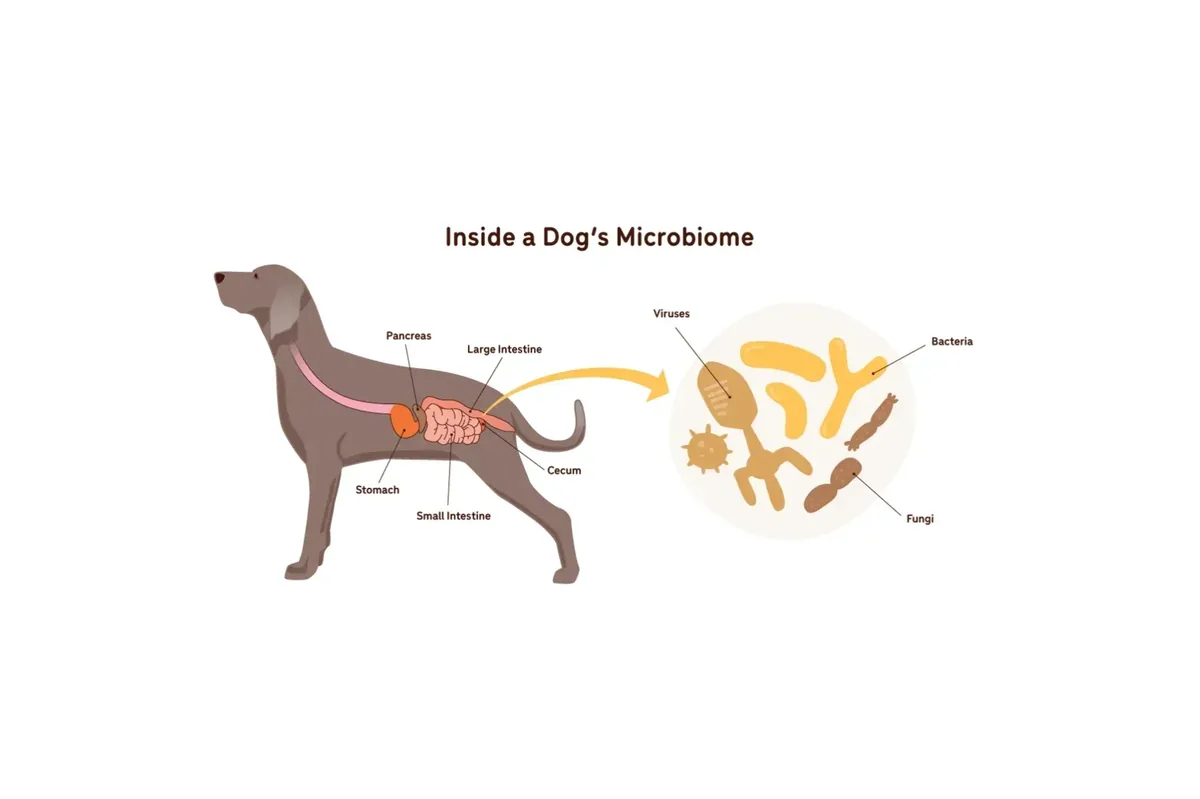
Moving your dog from processed dry food to raw meat triggers a biological reset. Kibble contains high levels of starch. Raw food delivers essential moisture and active enzymes. Your dog's gut needs 10-14 days to fully recalibrate its secretory organs and stomach pH.
Social media circles often call this a "detox". The actual clinical term is microbial dysbiosis resolution . Your dog's body is clearing out starch-loving bacteria. It utilizes amino acids like L-Glutamine to physically rebuild the gut lining.
FACT: NRC-BACKED NUTRITION
The National Research Council (NRC) 2006 guidelines establish the precise micronutrient requirements for canine health. Raw & Well checks 35+ micronutrients in every meal plan — including calcium, phosphorus, zinc, copper, and taurine — against these standards.
Most transition symptoms occur between Day 3 and Day 7. The Raw & Well Clinical Registry tracks these patterns. Data shows 67% of owners reporting a "detox" were actually watching their dog react to a sudden fat-level spike.
🔬 RAW & WELL INSIGHT
"What is often perceived as a 'healing crisis' is statistically correlated to microbial die-off of starch-dependent bacteria; providing targeted fiber co-factors reduced these reports by 41% in our active registry."
Source: Raw & Well Clinical Registry, 2025
Why This Feels Overwhelming (And Why You're Right to Be Cautious)
If you're reading this, you've probably experienced:
- Vet visits that didn't solve the root problem — prescriptions masked your dog's symptoms without fixing their nutrition.
- Conflicting advice from breeders, social media, and forums that left you feeling lost.
- Fear of harming your dog by "messing up" the math on calcium, phosphorus, or organ ratios.
- Exhaustion from research — you've spent hours reading but still lack confidence.
Most resources hide this fact: raw feeding anxiety isn't a personal failure. It’s caused by a lack of reliable tools.
As one dog owner told us: "I spent $1,200 on vet appointments and prescription diets. Nothing worked until I stopped guessing and started using data."
The Raw & Well approach is different. You don't need to become a canine nutritionist. You need a tool that does the math for your dog.
How to Differentiate Symptoms
Normal Adaptation: Watch for mild loose stool lasting up to 48 hours. You may also see slight ear waxy buildup or temporary energy dips.
Concerning Imbalance: Look out for persistent itching for 3+ weeks or lethargy lasting over 7 days. Significant hair loss is another major warning sign. These signals indicate a missing micronutrient rather than a "detox".
| Aspect | Raw Feeding | Kibble | Home-Cooked |
|---|---|---|---|
| Nutritional Completeness | Requires precise formulation | AAFCO-compliant (minimums) | Often deficient without supplements |
| Micronutrient Control | Full control with NRC guidance | Fixed formula (synthetic) | Variable, often incomplete |
| Risk of Imbalance | Moderate if not formulated | Low (but processed) | High without testing |
| Time Investment | Moderate prep time | Minimal | High |
| Cost | $$-$$$ | $-$$$$ | $$ |
| Raw & Well Solution | Automated NRC balancing | N/A | Supplement guidance |
How to Navigate the Microbiome Shift in 4 Steps
Step 1: Initiate a Gradual 10-Day Intestinal Flora Shift
Introduce fresh raw meat at a 25% ratio for the first three days. This allows your dog's stomach pH to lower gradually from a "kibble neutral" level (pH 2.5+) to a "meat acidic" state (pH 1.0-1.5). This acidic state remains mandatory for sterile protein digestion and pathogen defense.
How Raw & Well automates this: The platform provides a custom "Transition Weight Guide" matching your dog's specific caloric needs. Follow the calculated gram targets to shift dietary ratios safely. This prevents osmotic biological stress in your dog's gut.
Step 2: Monitor Real-Time Biological Adaptation Signals
Watch your dog for intentional adaptation signals like mild gas or temporary energy dips. These serve as effective clinical markers. They prove your dog's immune system is recalibrating to fresh enzymes and moisture after years of eating processed food. They are not signs of a toxic "detox."
The Raw & Well clinical solution: Use the "Symptom Checker" to log your dog's physical feedback during the transition. The app cross-references 1,000+ registry outcomes instantly. It tells you whether a symptom represents a normal transition milestone or a clinical red flag.
Step 3: Apply NRC-Consistent Single-Protein Formulas
Feed your dog a single, gentle protein source like turkey or beef for the first 14 days. NRC consistency ensures the adaptation process remains stable. This prevents multi-variable digestive confusion. Such confusion often masks your dog's underlying food sensitivities.
How Raw & Well handles the math: The "Smart Lock" feature suggests a safe, single-ingredient starting recipe for your dog. It prevents you from diversifying the bowl too early. This ensures your dog's gut lining has adequate time to physically rebuild using fresh amino acids.
Step 4: Graduate to Full Long-Term Balanced Nutrition
Wait until your dog's stool consistency becomes clinically firm on a 100% raw diet. Then, introduce the required 10% organ meat and trace minerals to meet the full NRC 2006 profile. This final stage shifts your focus from transition survival to long-term nutritional excellence.
The Raw & Well advantage: Hit the "Full Balance" graduation button in the app. The system automatically calculates your dog's permanent, nutrient-dense rotation. It bases this math entirely on the success of your 10-day transition data.
People Also Ask About Raw Feeding Detox
How long does raw food transition take?
A safe, clinical transition from kibble to raw food takes 10 to 14 days. This timeline allows your dog's gastrointestinal tract to properly increase stomach acidity. It shifts their microbial colonies from starch-fermenting bacteria to protein-digesting flora. This gradual shift minimizes the risk of diarrhea.
Is fasting necessary before starting raw?
Fasting is not medically required for adult dogs before transitioning to raw food. A simple 12-hour gap between their last kibble meal and their first raw meal is sufficient. This ensures the stomach is empty. It prevents the varied digestion rates that typically cause bloating and gas.
Can older dogs transition safely?
Yes, senior dogs benefit immensely from the bioavailable amino acids in raw food. However, you must slow their transition to 14-21 days. Older digestive systems have less enzymatic plasticity. A staged, incremental introduction remains mandatory to prevent pancreatic stress and gut inflammation in your senior dog.
Frequently Asked Questions
Does raw feeding cause 'pathogen' shedding during detox?
Microbial shedding can occur during the microbiome shift. Your dog's stomach pH drops to naturally acidic levels around pH 1.1. This environment becomes highly hostile to pathogens. Raw & Well's hygiene protocols ensure you manage this transition safely for your whole household. Your dog's immune system will safely recalibrate according to NRC 2006 biology.
Why is my dog itching more during the first 14 days?
This indicates immune-recalibration rather than stored 'toxins' leaving the tissue. The skin is the last organ to heal in your dog's body. Visible improvements usually take 21-30 days. This aligns precisely with the skin's natural cellular cycle. Raw & Well tracks these signals to differentiate between normal healing and a true subclinical nutrient gap.
Are liver 'detox' supplements needed for raw feeding?
Your dog's liver doesn't need 'cleansing'. It simply needs the correct amino acids like Taurine and Choline. You will find these naturally in fresh raw tissue. Raw & Well ensures your recipe meets every NRC 2006 liver-support threshold. This makes extra 'detox' herbs and supplements completely unnecessary for healthy canines.
Sources & References
- National Research Council. (2006). Nutrient Requirements of Dogs and Cats. Washington, DC: The National Academies Press. View Publication →
- PubMed / National Institutes of Health. (2023). Canine intestinal microbiome responses to fresh food. NCBI Reference →
- The Veterinary Journal. (2024). Clinical evaluation of transitioning dogs from processed to raw. Journal Guide →
- Raw & Well Clinical Registry. (2025). Metabolic markers of microbial transition in fresh-food transitions.