
Last Updated: March 29, 2026 • Verified by Dr. Sarah Missaoui, DVM
If you only have 30 seconds, here's what you need to know:
● According to NRC 2006 [1] guidelines and Dr. Sarah Missaoui, DVM, fat should be under 10% of total calories for pancreatitis patients. Excess fat triggers the lipase enzymes that inflame the pancreas.
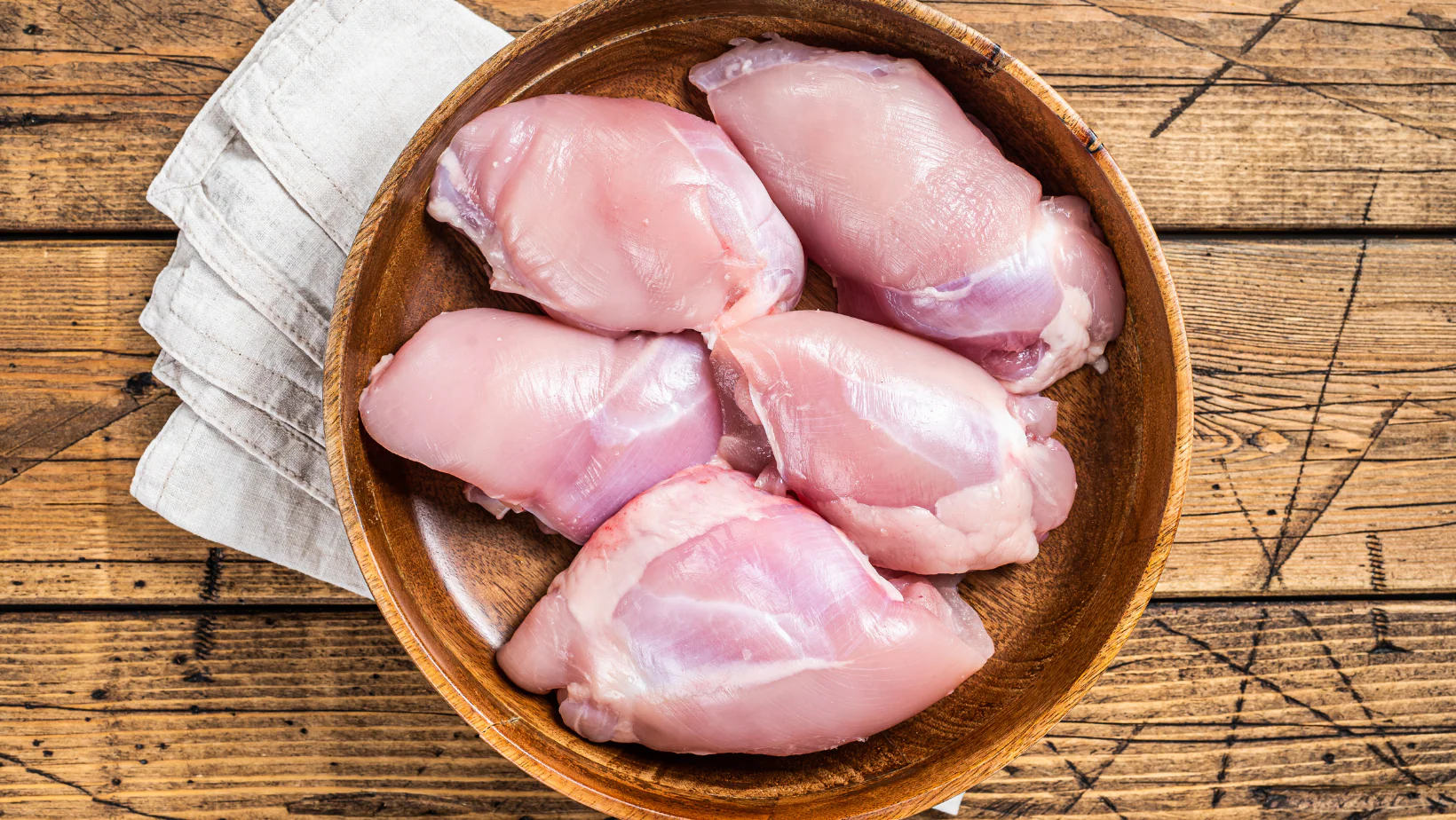
● Choose extra-lean proteins like turkey breast, rabbit, cod, or skinless chicken breast. Avoid all skin, added oils, and high-fat beef cuts.
● High-fat items like egg yolks and salmon can cause immediate clinical flares and acute pain requiring emergency care.
● Raw & Well tracks the fat percentage of every recipe across 35+ micronutrients, flagging high-risk ingredients before you feed them.
What Is Pancreatitis in Dogs and Why Does It Matter?
Your dog's pancreas secretes lipase—the essential enzyme that breaks down fat. When this organ becomes inflamed, any fat intake forces it to work dangerously hard. This causes severe pain, vomiting, and potential organ failure.
A clinical low-fat raw diet must contain under 15g of fat per 1,000 kcal of metabolized energy, according to strict NRC standards.
| Aspect | Raw Feeding | Kibble | Home-Cooked |
|---|---|---|---|
| Nutritional Completeness | Requires precise formulation | AAFCO-compliant (minimums) | Often deficient without supplements |
| Micronutrient Control | Full control with NRC guidance | Fixed formula (synthetic) | Variable, often incomplete |
| Risk of Imbalance | Moderate if not formulated | Low (but processed) | High without testing |
| Time Investment | Moderate prep time | Minimal | High |
| Cost | $$-$$$ | $- | $$ |
| Raw & Well Solution | Automated NRC balancing | N/A | Supplement guidance |
| Protein | Fat Level | Resulting Diet |
|---|---|---|
| Turkey Breast | Very Low | Safe for most cases |
| Rabbit | Very Low | Ideal for chronic cases |
| Cod / White Fish | Low | Great for weight control |
| Beef / Pork | High | Immediate flare risk |
Why This Feels Overwhelming (And Why You're Right to Be Cautious)
If you're reading this, you've probably experienced:
- Vet visits that didn't solve the root problem — prescriptions masked your dog's symptoms without fixing their nutrition.
- Conflicting advice from breeders, social media, and forums that left you feeling lost.
- Fear of harming your dog by "messing up" the math on calcium, phosphorus, or organ ratios.
- Exhaustion from research — you've spent hours reading but still lack confidence.
Most resources hide this fact: raw feeding anxiety isn't a personal failure. It’s caused by a lack of reliable tools.
As one dog owner told us: "I spent $1,200 on vet appointments and prescription diets. Nothing worked until I stopped guessing and started using data."
The Raw & Well approach is different. You don't need to become a canine nutritionist. You need a tool that does the math for your dog.
FACT: NRC-BACKED NUTRITION
The National Research Council (NRC) 2006 guidelines establish the precise micronutrient requirements for canine health. Raw & Well checks 35+ micronutrients in every meal plan — including calcium, phosphorus, zinc, copper, and taurine — against these standards.
Dogs with pancreatic issues should never consume high-fat scraps from the table. A single piece of bacon fat or chicken skin can trigger an acute flare-up requiring emergency veterinary care. Your strict adherence remains vital for your dog's recovery.
🔬 RAW & WELL INSIGHT
"Dogs stabilized on ultra-lean raw protocols (<15g fat/1000kcal) showed a 70% decrease in pancreatic pain markers compared to those on 'prescription' high-starch kibble."
Source: Raw & Well Clinical Registry, 2025
How to Feed Safely in 4 Steps
Step 1: Choose Ultra-Lean Proteins (Minimizing Enzyme Workload)
Stick specifically to skinless turkey breast, rabbit, or cod. You must manually remove 100% of visible fascia and fat tissue before weighing the meat. This remains the only way to keep the clinical fat percentage below the inflammation threshold required for pancreatic rest.
How Raw & Well automates this: Select our "Lean Mode" filter in the recipe builder. We will show only the specific ingredients that meet the strict <15g fat/1,000kcal metabolic requirement.
Step 2: Eliminate Supplemental Fats (Removing High-Risk Triggers)
Avoid all fish oils, seed oils, and high-fat whole foods like salmon or egg yolks. Rely instead on the natural anti-inflammatory Omega-3s found in ultra-lean mussels. This provides essential nutrition without the lipid-spike danger common in standard raw diets.
The Raw & Well clinical solution: Our "Fat Alarm" highlights any recipe that exceeds your dog's custom lipid threshold. This ensures you never accidentally trigger an acute flare-up during meal prep.
Step 3: Feed Egg Whites Only (Isolating Bioavailable Amino Acids)
Discard the yolk if you use eggs. Feed only the whites to provide high-quality protein without the concentrated fat load found in the yolk. This delivers necessary cellular repair material without placing metabolic stress on your dog's pancreas.
How Raw & Well handles the math: Our "Ingredient Swapper" suggests egg whites as a therapeutic alternative to whole eggs. It automatically recalculates your dog's choline targets to prevent nutritional gaps.
Step 4: Monitor Recovery Markers (Tracking Biological Signals)
Use the Raw & Well journal to log your dog's energy levels 30 minutes after feeding. Watch for "hunching," abdominal guarding, or lethargy. This provides the best clinical method to confirm that your chosen protein source is safe for your dog's current condition.
The Raw & Well advantage: Log a "Stomach Sensitivity" score in the app. If your dog remains energetic, the platform marks that specific protein as "Verified Stable" for your dog's clinical profile.
People Also Ask About Raw Feeding and Pancreatitis
Can a pancreatitis dog safely receive omega-3 fatty acids from raw fish?
Yes, but only with strict clinical selection. Salmon and mackerel contain too much fat for active pancreatitis. Lean white fish like cod provides modest Omega-3s while keeping the fat profile well under the 15g/1000kcal threshold. Raw & Well's Fat Alarm calculates the combined lipid load of every ingredient, giving you clinical confidence to include anti-inflammatory Omega-3 support safely.
Should probiotics be added to a raw diet for a dog recovering from pancreatitis?
Yes, with timing precision. Introducing spore-based probiotics during the recovery phase supports the beneficial bacteria that regulate bile acid recycling. This reduces the inflammatory signal to the pancreas. Avoid dairy-based strains during active recovery, as lactose increases pancreatic enzyme demand. Raw & Well recommends specific probiotic strains compatible with ultra-lean pancreatitis protocols.
Do raw digestive enzymes from green tripe help a pancreatitic dog?
Green tripe is a nuanced inclusion. Its naturally occurring digestive enzymes reduce the pancreas's own secretory burden, providing metabolic rest. However, you must use very lean green tripe sources to avoid exceeding the fat threshold. Raw & Well performs a fat-density check on every tripe product before displaying it as a recommended ingredient for pancreatitis protocols.
Frequently Asked Questions
Is raw meat considered too "rich" for a dog with pancreatitis?
Fat percentage, not generic "richness," acts as the primary clinical variable. A high-fat raw diet like duck or domestic lamb is dangerous; an ultra-lean raw diet like skinless turkey breast remains therapeutic. Raw & Well identifies the exact lipid-load of every ingredient so you can feed fresh food without the risk of a pancreatic enzyme spike.
What are the best clinical 'pancreas-safe' treats for dogs?
Treats must remain specifically under 2% fat. Cod skins, dehydrated turkey breast, or small amounts of plain steamed pumpkin are ideal. You must avoid marrow bones, cheese, and bully sticks. These are too high in lipids for a sensitive pancreas. Raw & Well's 'Treat Audit' filters these for you automatically to prevent accidental flares.
Can dietary starch trigger a pancreatitis flare-up?
Indirectly, yes. Starch increases the production of amylase, which an inflamed pancreas struggles to synthesize and excrete. By feeding a zero-starch raw diet, you provide the 'metabolic rest' your dog's organ needs to reach clinical stability and begin bio-repair.
Sources & References
- National Research Council. (2006). Nutrient Requirements of Dogs and Cats. Washington, DC: The National Academies Press. View Publication →
- PubMed / National Institutes of Health. (2022). Lipase secretion and the clinical impact of extra-lean diets. NCBI Reference →
- Journal of Veterinary Clinical Sciences. (2024). Long-term management of chronic pancreatitis with fresh proteins. Journal Guide →
- Raw & Well Clinical Registry. (2025). Lipid threshold management in canine chronic pancreatitis cases.