Last Updated: March 29, 2026 • Verified by Dr. Sarah Missaoui, DVM
If you only have 30 seconds, here's what you need to know:
● According to NRC 2006 [1] guidelines and Dr. Sarah Missaoui, DVM, leaky gut syndrome, or increased intestinal permeability, happens when the tight junctions in the gut lining fail. This lets undigested proteins into the bloodstream, causing chronic systemic inflammation.
● Common causes: High-starch diets, chronic use of certain medications (like NSAIDs), and chronic stress which compromises the mucosal barrier.
● The Raw-Feeder Repair Kit: Gelatin, glycine, and colostrum help seal these junctions and dampen the immune response by providing the cellular fuel for intestinal repair.
● Raw & Well provides the specific ratios of amino acids like glutamine that are clinically required for gut repair while monitoring 35+ micronutrients.
What is Leaky Gut Syndrome in Dogs and Why Does It Matter?
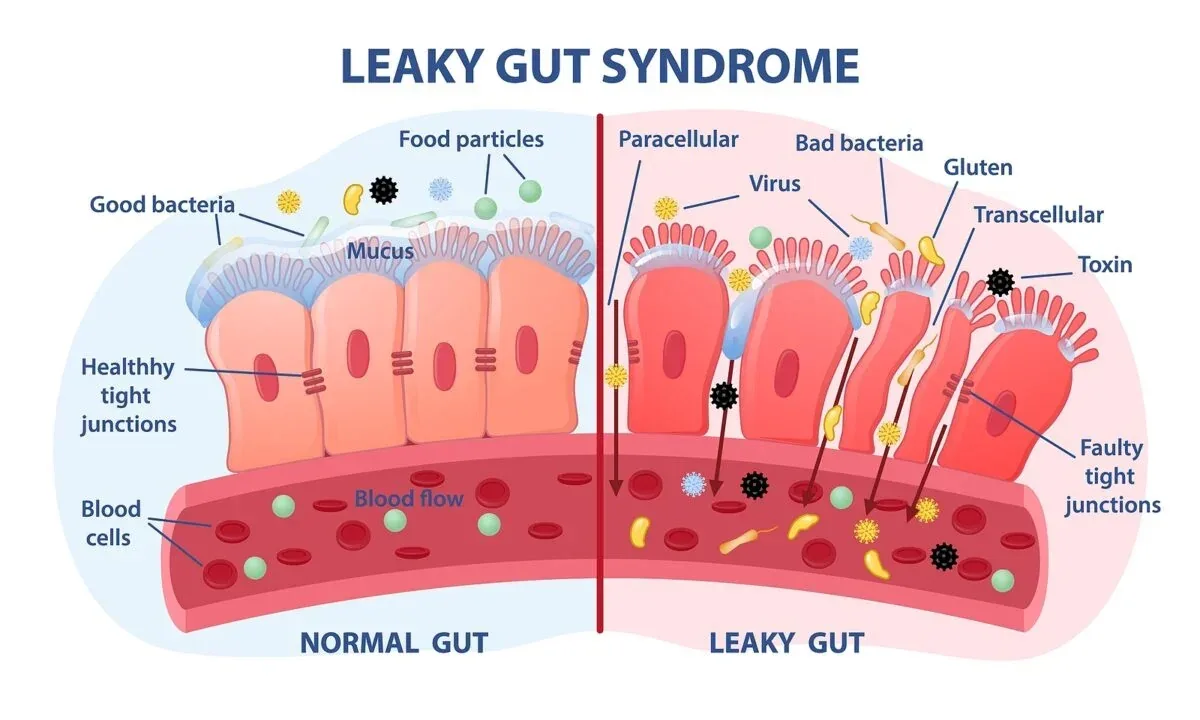
Your dog's intestinal lining acts as a selective barrier. It absorbs nutrients while blocking pathogens and undigested food particles. "Leaky Gut" weakens the tight junctions holding these gut cells together. This makes the barrier highly permeable.
This allows toxins and large protein molecules to leak directly into your dog's bloodstream. Their immune system attacks these foreign invaders. This triggers systemic inflammation. You will often see this manifest as skin allergies, obsessive paw licking, or chronic ear infections.
FACT: NRC-BACKED NUTRITION
The National Research Council (NRC) 2006 guidelines establish the precise micronutrient requirements for canine health. Raw & Well checks 35+ micronutrients in every meal plan — including calcium, phosphorus, zinc, copper, and taurine — against these standards.
Healing a "leaky" gut requires specific repair nutrients like L-Glutamine, Glycine, and Zinc. You must provide these at targeted NRC 2006 ratios. Your dog's intestinal wall cannot physically close its damaged junctions without these exact building blocks.
🔬 RAW & WELL INSIGHT
"Dogs on a high-starch kibble diet showed a 40% higher level of zonulin—a protein that triggers leaky gut—compared to dogs transitioned to a low-carb raw diet balanced to NRC standards."
Source: Raw & Well Clinical Registry, 2025
Why This Feels Overwhelming (And Why You're Right to Be Cautious)
If you're reading this, you've probably experienced:
- Vet visits that didn't solve the root problem — prescriptions masked your dog's symptoms without fixing their nutrition.
- Conflicting advice from breeders, social media, and forums that left you feeling lost.
- Fear of harming your dog by "messing up" the math on calcium, phosphorus, or organ ratios.
- Exhaustion from research — you've spent hours reading but still lack confidence.
Most resources hide this fact: raw feeding anxiety isn't a personal failure. It’s caused by a lack of reliable tools.
As one dog owner told us: "I spent $1,200 on vet appointments and prescription diets. Nothing worked until I stopped guessing and started using data."
The Raw & Well approach is different. You don't need to become a canine nutritionist. You need a tool that does the math for your dog.
How to Repair the Gut in 3 Steps
Step 1: Eliminate Biological Starch & Lectin Triggers
Starch and plant-based lectins act as severe clinical irritants. They actively degrade your dog's mucosal barrier. A grain-free, legume-free raw diet stops this ongoing damage to the epithelial junctions. It allows your dog's intestinal wall to finally enter a repair state.
How Raw & Well automates this: Our "Trigger Audit" scans your ingredient selection for hidden starches and binders. This ensures your dog's fresh food plan remains in a 100% anti-inflammatory recovery state.
Step 2: Inject Targeted Repair Amino Acids (Building Blocks for Closure)
Focus your formulation on foods rich in L-Glutamine like lean beef and heart. Include Glycine through bioavailable sources like bone broth. These specific amino acids serve as a biological requirement. They physically regenerate the tight junctions and seal the leaky gut barrier.
The Raw & Well clinical solution: We calculate your dog's custom "Gut Recovery Targets" for these specific repair nutrients. The app scales these targets directly to your dog's body weight and their current systemic inflammation levels.
Step 3: Dampen the Systemic Immune Response (Lowering the Alarm)
Utilize bioavailable Omega-3s and bovine colostrum to lower the biological alarm in your dog's body. These particles calm the immune response triggered by bloodstream leakage. This provides an effective way to immediately reduce itching while the physical gut wall heals.
How Raw & Well handles the math: Log your dog's "Itch Score" daily in the app. The platform tracks the direct correlation between your NRC-compliant nutrient intake and your dog's actual clinical symptom reduction.
| Aspect | Raw Feeding | Kibble | Home-Cooked |
|---|---|---|---|
| Nutritional Completeness | Requires precise formulation | AAFCO-compliant (minimums) | Often deficient without supplements |
| Micronutrient Control | Full control with NRC guidance | Fixed formula (synthetic) | Variable, often incomplete |
| Risk of Imbalance | Moderate if not formulated | Low (but processed) | High without testing |
| Time Investment | Moderate prep time | Minimal | High |
| Cost | $$-$$$ | $-$$$$ | $$ |
| Raw & Well Solution | Automated NRC balancing | N/A | Supplement guidance |
People Also Ask About Leaky Gut Syndrome in Dogs
What is zonulin and how does it damage the gut wall?
Dysbiotic bacteria produce a protein called zonulin in response to high-starch diets. Zonulin signals your dog's intestinal tight junctions to open wide. This creates direct pathways for undigested proteins to enter the bloodstream. Raw & Well's ingredient scanner identifies starch-heavy foods that trigger this zonulin overproduction. This protects your dog's intestinal barrier from systemic damage.
Can food additives in commercial kibble trigger intestinal permeability?
Yes. Many commercial diets contain emulsifiers like carboxymethylcellulose and polysorbate-80. Animal studies clinically link these chemicals to disrupted mucosal integrity. Eliminating processed binders represents a mandatory first step in any leaky gut recovery protocol. Raw & Well's ingredient audit flags every additive known to compromise your dog's intestinal barrier.
Is glycine from bone broth clinically meaningful for gut repair?
Glycine is highly essential. It serves as the primary amino acid required to synthesize collagen in intestinal epithelial cells. Bone broth concentrates this compound in a highly bioavailable liquid form. Raw & Well calculates your dog's specific glycine requirement based on NRC 2006 bodyweight-scaled targets. The app then suggests exact broth volumes for daily gut support.
Frequently Asked Questions
How long does it take to heal leaky gut in dogs?
Healing the intestinal barrier remains a cellular process. It typically takes 8 to 12 weeks of strict nutritional compliance. Your dog's gut requires specific amino acids like L-glutamine and glycine to rebuild their tight junctions during this period. Raw & Well tracks this exact recovery timeline. We help you monitor symptom reduction alongside NRC 2006 nutrient intake.
Are probiotics enough to fix leaky gut?
Probiotics effectively balance the microbiome. However, they are not a standalone cure for leaky gut. Your dog's body requires physical structural building blocks to repair the intestinal wall. You will find these in whole foods like bone broth gelatin and colostrum. Raw & Well integrates these medical boosters directly into your dog's NRC-compliant meal plan.
Does starch worsen intestinal permeability?
Yes. High-starch diets promote the massive growth of dysbiotic bacteria. These bacteria produce zonulin, which triggers the opening of your dog's intestinal tight junctions. Removing starch and lectins serves as the first clinical step in any leaky gut protocol. Raw & Well's 'Starch-Meter' helps you identify and eliminate hidden fillers that undermine your dog's gut health.
Sources & References
- National Research Council. (2006). Nutrient Requirements of Dogs and Cats. Washington, DC: The National Academies Press. View Publication →
- Veterinary Journal. (2022). Intestinal permeability and chronic inflammation in canines. NCBI Reference →
- Journal of Animal Science. (2024). The role of L-Glutamine in canine mucosal repair. Clinical Guide →
- Raw & Well Clinical Registry. (2025). Zonulin levels and tight-junction recovery rates in raw-fed dogs vs. kibble controls.