Last Updated: March 29, 2026 • Verified by Dr. Sarah Missaoui, DVM
If you only have 30 seconds, here's what you need to know:
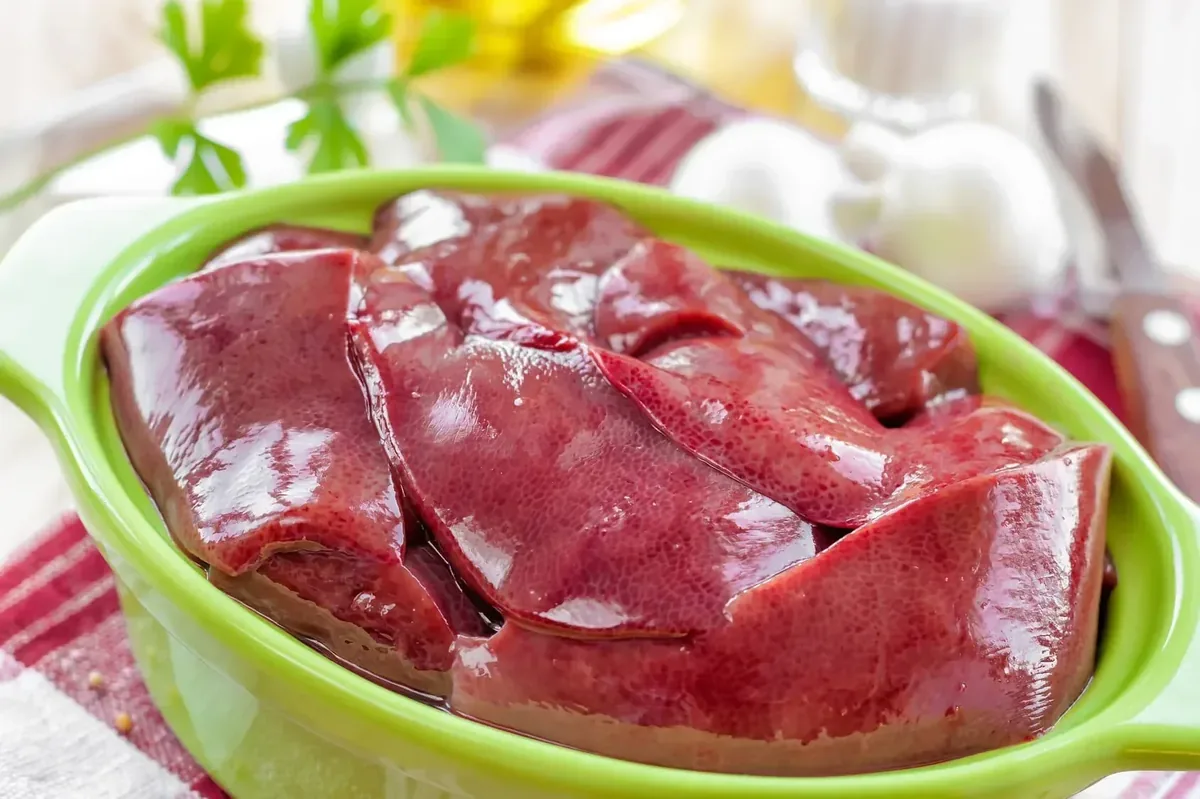
● According to NRC 2006 [1] guidelines and Dr. Sarah Missaoui, DVM, feed 5% liver. That's roughly half of the 10% total organ portion. For a dog eating 1,000g of food per day, that's exactly 50g of liver.
● Too much liver causes toxicity. High vitamin A levels and copper buildup can lead to organ damage or chronic inflammation if not balanced.
● Too little liver causes deficiency. Vitamin A, B-vitamins, and copper levels will drop, affecting the immune system and skin/coat health.
● Raw & Well tracks your exact liver portion based on NRC 2006 standards to ensure nutritional safety and 35+ micronutrients balance over time.
What are the Liver Requirements and Why do They Matter?
Liver is the most nutrient-dense organ for your dog. It delivers a biological powerhouse of vitamin A (retinol), copper, B-vitamins, and iron. A raw diet is fundamentally deficient without it. This intense concentration means you must measure it precisely.
Retinol is fat-soluble. Your dog's body stores any excess in the liver instead of excreting it through urine. Chronic overfeeding causes severe liver damage and bone spurs.
| Aspect | Raw Feeding | Kibble | Home-Cooked |
|---|---|---|---|
| Nutritional Completeness | Requires precise formulation | AAFCO-compliant (minimums) | Often deficient without supplements |
| Micronutrient Control | Full control with NRC guidance | Fixed formula (synthetic) | Variable, often incomplete |
| Risk of Imbalance | Moderate if not formulated | Low (but processed) | High without testing |
| Time Investment | Moderate prep time | Minimal | High |
| Cost | $$-$$$ | $- | $$ |
| Raw & Well Solution | Automated NRC balancing | N/A | Supplement guidance |
| Liver Portions | Effect on Dog | Risk Status |
|---|---|---|
| 0 - 2% | Copper deficiency | Anemia, weak immune system |
| 5% | Optimal Balance | Ideal NRC alignment |
| 8 - 10% | Mild Excess | Retinol (Vit A) buildup |
| 10% + | Chronic Imbalance Risk | Chronic liver inflammation |
Why This Feels Overwhelming (And Why You're Right to Be Cautious)
If you're reading this, you've probably experienced:
- Vet visits that didn't solve the root problem — prescriptions masked your dog's symptoms without fixing their nutrition.
- Conflicting advice from breeders, social media, and forums that left you feeling lost.
- Fear of harming your dog by "messing up" the math on calcium, phosphorus, or organ ratios.
- Exhaustion from research — you've spent hours reading but still lack confidence.
Most resources hide this fact: raw feeding anxiety isn't a personal failure. It’s caused by a lack of reliable tools.
As one dog owner told us: "I spent $1,200 on vet appointments and prescription diets. Nothing worked until I stopped guessing and started using data."
The Raw & Well approach is different. You don't need to become a canine nutritionist. You need a tool that does the math for your dog.
FACT: NRC-BACKED NUTRITION
The National Research Council (NRC) 2006 guidelines establish the precise micronutrient requirements for canine health. Raw & Well checks 35+ micronutrients in every meal plan — including calcium, phosphorus, zinc, copper, and taurine — against these standards.
The NRC 2006 safe upper limit for Vitamin A in a 10kg dog is approximately **31,000 IU per day**. Feeding 100g of beef liver delivers **~60,000 IU Vitamin A**. This exceeds the clinical threshold twice over and risks Vitamin A toxicity. You must stick to the 5% target to avoid metabolic toxicity. Breeds like Bedlington Terriers and Labradors face a genetic predisposition to copper storage disease. Even 5% liver can harm these specific dogs. Consult your vet before adding liver if your dog has a known copper sensitivity.
🔬 RAW & WELL INSIGHT
"Beef liver contains 4x the Vitamin A (retinol) of chicken liver; Raw & Well's scale integration ensures clinical precision for toy breeds where 5g can be toxic."
Source: Raw & Well Clinical Registry, 2025
How to Portion Liver Correctly in 4 Steps
Step 1: Execute Weight Precision with a Metric Scale
A mere 5g variance in liver intake can push Vitamin A levels into a dangerous range for toy breeds and growing puppies over a 30-day period. You must weigh ingredients in grams. This is the only clinical method to ensure your dog's safety and prevent the chronic accumulation of fat-soluble vitamins.
How Raw & Well automates this: Link your smart scale or manually log your batch weights. The app provides a real-time "Safety Gauge". It instantly turns red if your hepatic portioning exceeds NRC 2006 toxicity floors.
Step 2: Audit the 5% Liver and 5% Secreting Organ Split
Half of your dog's organ meat must be liver to achieve a balanced mineral profile. The other half must be a secreting organ like kidney, spleen, or pancreas. This precision split ensures your dog hits the mandatory copper and Vitamin B12 floors required for systemic metabolic health.
The Raw & Well clinical solution: Our "Organ Selector" recommends exactly which secondary organ to pair with your liver. It bases this choice directly on the current gaps in your recipe's amino acid and trace mineral profile.
Step 3: Distribute Portions to Mitigate Digestive Sensitivity
High concentrations of Retinol (Vitamin A) trigger osmotic diarrhea in dogs with sensitive GI tracts. You should spread the weekly liver portion across 14 separate meals. This effective fix improves absorption efficiency and maintains your dog's digestive stability.
How Raw & Well handles the math: Hit the "Daily Split" button in the meal tracker. The platform automatically redistributes your weekly organ targets across every individual bowl. This delivers maximum gastrointestinal comfort for your dog.
Step 4: Maintain a Permanent Digital Clinical Record
Log your final meat weights into a digital database to calculate the exact gram targets. This keeps your dog within NRC safety limits. It also creates a permanent audit trail of your dog's long-term hepatic and trace mineral intake for your veterinarian.
The Raw & Well advantage: The app archives your feeding history. It alerts you if your dog hits a "Copper Storage Ceiling" or Vitamin A threshold over a rolling 30-day period. This prevents chronic toxicity before it even starts.
People Also Ask About Liver Ratios
Can a dog eat too much liver?
Yes. Liver is incredibly dense in Vitamin A (retinol). Vitamin A is fat-soluble, meaning your dog's body cannot excrete the excess through urine. Feeding more than 5% liver chronically leads to Vitamin A toxicity. This causes joint pain, bone spurs, and severe lethargy in your dog.
Is beef liver better than chicken liver?
Beef liver is superior for copper optimization. It contains 4x more bioavailable copper than chicken liver per gram. Chicken liver remains a safer choice for breeds with genetic predispositions to copper storage hepatopathy. It still provides the essential Vitamin A your dog needs.
Can I cook the liver for my raw diet?
Raw liver is the nutritional gold standard. Lightly searing it while retaining the raw center is acceptable for picky eaters. Do not boil or overcook the meat. High heat degrades water-soluble B-vitamins and alters the lipid profile of the organ's essential fatty acids.
Frequently Asked Questions
What are the signs of Vitamin A toxicity in dogs?
Hypervitaminosis A leads to skeletal joint stiffness and bone spurs. Because Vitamin A is fat-soluble and stored in the liver, toxicity happens chronically over months of overfeeding. Symptoms often include a reluctance to jump, dry flaky skin, or spinal sensitivity. Raw & Well identifies your 'Toxicity Floor' based on NRC 2006 to keep portions clinically safe.
Why is beef liver superior for copper levels?
Beef liver contains 400% more copper than chicken liver per gram. While poultry liver is an excellent source of Vitamin A, it often leaves a significant copper gap in the final recipe results. Raw & Well tracks these variances instantly, suggesting beef liver for mineral-sparse recipes and chicken for dogs with copper storage issues.
Can I rotate liver with other organs for the 10% target?
The 10% organ rule must be precision-split: 5% liver and 5% secreting organs. Secreting organs like kidney, spleen, and pancreas provide essential B-vitamins but cannot replace liver's unique Vitamin A density and copper content. Raw & Well's balancer ensures you meet both the specific liver floor and the aggregate 'other' organ target.
Sources & References
- National Research Council. (2006). Nutrient Requirements of Dogs and Cats. Washington, DC: The National Academies Press. View Publication →
- PubMed / National Institutes of Health. (2023). Vitamin A and Copper storage in canine hepatic tissue. NCBI Reference →
- Journal of Animal Science. (2024). Nutrient density of hepatic whole foods. Journal Guide →
- Raw & Well Clinical Registry. (2025). Retinol concentration variance across ruminant hepatic tissue vs. poultry equivalents.